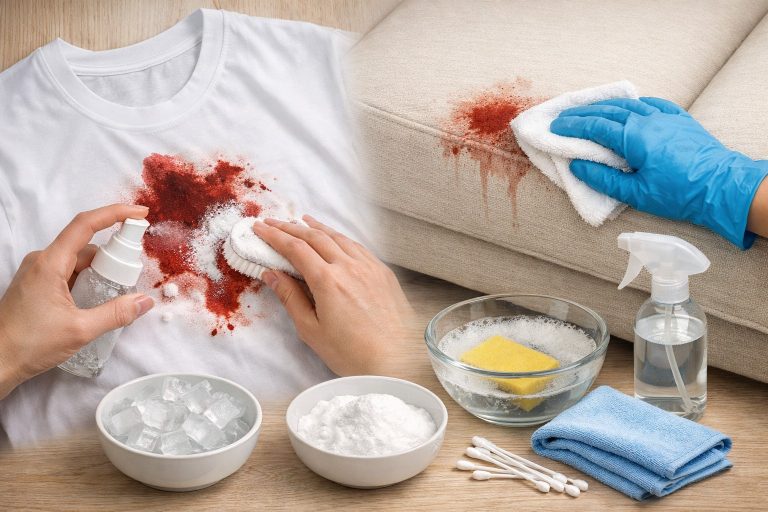

Spilled coffee is not a verdict for your favorite white shirt or light-colored carpet. The main rule in the fight against coffee stains is to promptness and the correct choice of cleaning agent depending on the type of fabric. Coffee contains tannins and oils that penetrate deep into the fibers when dry, so rescue work should begin immediately.
Emergency measures for fresh soiling
If the trouble has just happened, the first thing to do is to soak excess liquid with a dry cloth. Never rub the stain, otherwise the area of the stain will increase and the pigment will penetrate deeper.
-
Use cold water. Direct the water jet from the wrong side of the product to literally knock the coffee particles out of the weave of the threads.
-
Apply the usual laundry soap. It effectively breaks down fresh organic compounds.
-
Take advantage of wet wipesif you are out of the house. They often contain alcohols and surfactants that can weaken the adhesion of the pigment to the fabric.
Effective home remedies for different fabrics
For each material there is a different “gold standard” of cleaning, which allows you to preserve the structure of fibers and return things to their original appearance.
-
Glycerin and salt. This mixture is ideal for delicate materials such as silk or wool. Apply the mixture to the stain, leave it on for 10-15 minutes and then rinse gently with warm water.
-
Vinegar solution. Mix table vinegar with water and add a drop of dishwashing detergent. This composition perfectly copes with stains on thick cotton and denim fabric.
-
Hydrogen peroxide. This is a powerful bleach for white garments. It breaks down the structure of the coffee dye, returning the fabric to whiteness, but requires caution when used on colored items.
-
Naphtha. In combination with water, it helps to remove even stale, deep-rooted marks that do not succumb to conventional washing.
Special features of working with stubborn stains
If the coffee has had time to dry out completely, the usual soaking may not be enough. In such cases, modern oxygen stain removerswhich work at high temperatures. For natural fabrics without synthetics, you can use the following method heat treatmentThe product should be cleaned by gently pouring steep boiling water over the contaminated area until the yellowing disappears.
It is important to remember that before using any aggressive composition it is necessary to conduct a test on an inconspicuous area of the clothes. This will help to avoid damage to the dye or deformation of the material. Proper care and timely reaction allow you to fully restore the aesthetic appearance of textiles without going to a professional dry cleaner.
Many modern fabrics are highly resistant to household chemicals and are easily restored after proper treatment with home remedies.
About the Author