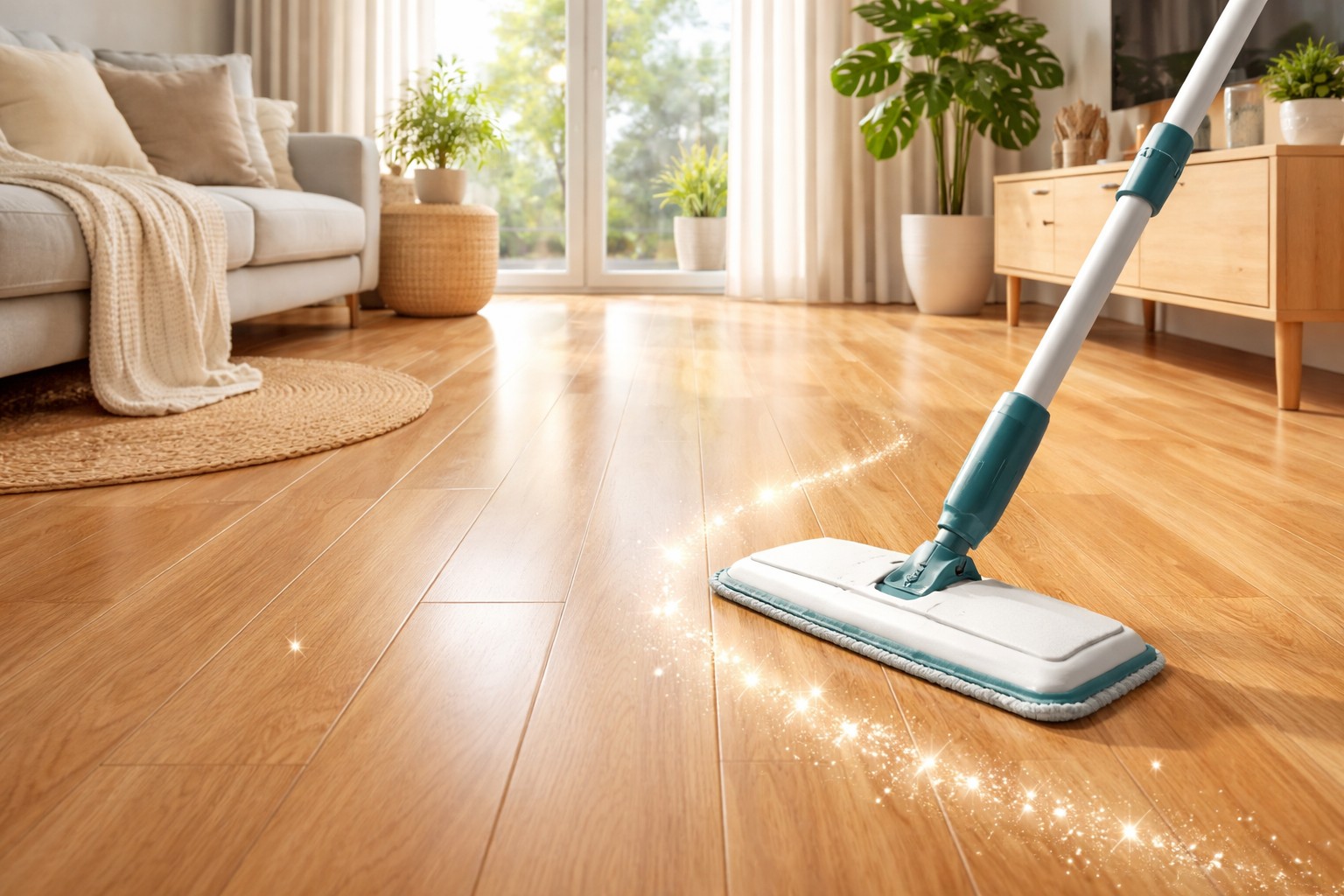
Many people are faced with the situation that after a thorough wet mopping the surface is left with muddy streaks or sticky spots. The problem most often lies not in the quality of the mop, but in the violation of the technology of the process and the wrong selection of means. In order to achieve a mirror shine, it is necessary to take into account the type of coating and the composition of the water used.
The main causes of stains after washing
Most often the following factors spoil the aesthetic appearance of the floor:
-
Using water that is too hot and evaporates quickly, leaving a residue.
-
Excess detergentwhich creates an invisible soap film.
-
Dirty water that was not changed in time when going from one room to another.
-
Accumulation of old layers of household chemicals attracting new dust.
-
Inappropriate rag material that does not absorb moisture well.
Secrets of professional cleaning
To achieve the ideal result, it is worth adhering to the proven algorithm that cleaning specialists use.
-
Preliminary dry cleaning. Before wet cleaning, be sure to remove sand, pet hair and dust with a vacuum cleaner or broom. Failure to do so will cause the fine particles to mix with the water and turn into a gray slurry that is extremely difficult to remove without leaving a trace.
-
Correct chemical dosage. More does not mean better. Over-concentration of the lineup is the main cause of the stickiness. If you use a specialized concentrate, strictly follow the proportions indicated on the label.
-
Microfiber is the best choice. Modern microfiber cloths hold dirt inside their structure rather than smearing it on the surface. For glossy coatings, it is better to have two nozzles: one for basic washing and one for dry wiping.
-
The “figure-eight” motion. Experienced craftsmen advise leading the mop not in straight lines, but drawing an imaginary figure eight. This allows you to collect debris in the center without leaving skips around the edges.
Features of different types of coatings
Each material requires an individual approach, as universal methods can damage the structure of the floor or leave specific marks.
-
Laminate. The most capricious coating. It is afraid of excessive moisture, so the rag should be wrung out as much as possible. For shine, you can add a small amount of ordinary table vinegar to the water.
-
Linoleum. Well tolerates soapy water, but fades from aggressive alkalis. To restore its original appearance, at the end of cleaning, wipe the surface with a soft cloth soaked in a weak solution of olive oil.
-
Porcelain stoneware and tiles. On glossy tiles, streaks are most noticeable. Here it is critical to change the water at least twice and to use products containing alcohol, which evaporate quickly.
-
Parquet. Natural wood requires careful maintenance with the use of special wax-based formulations.
Cleanliness in the house directly depends on the regularity of updating the inventory and cleanliness of the water itself in the process. Correctly selected inventory and compliance with the temperature regime can reduce the cleaning time in half and get a perfect result. Observance of these simple rules guarantees the absence of a sticky layer and preservation of the aesthetic appearance of any floor covering for a long time.
About the Author