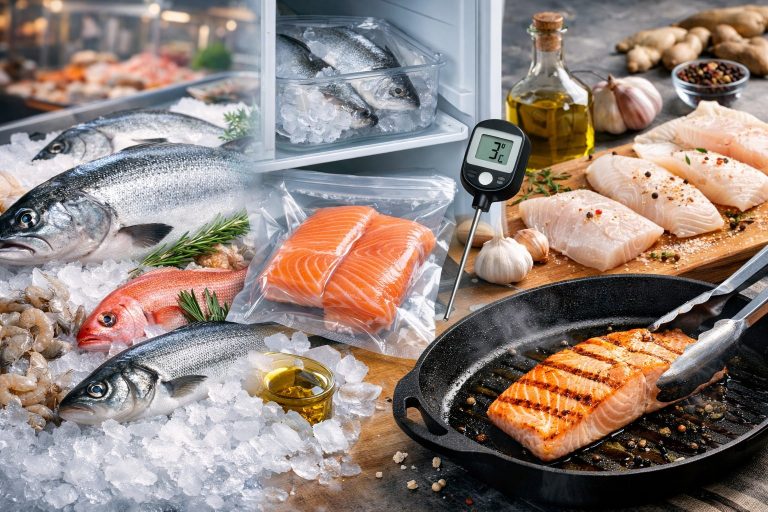
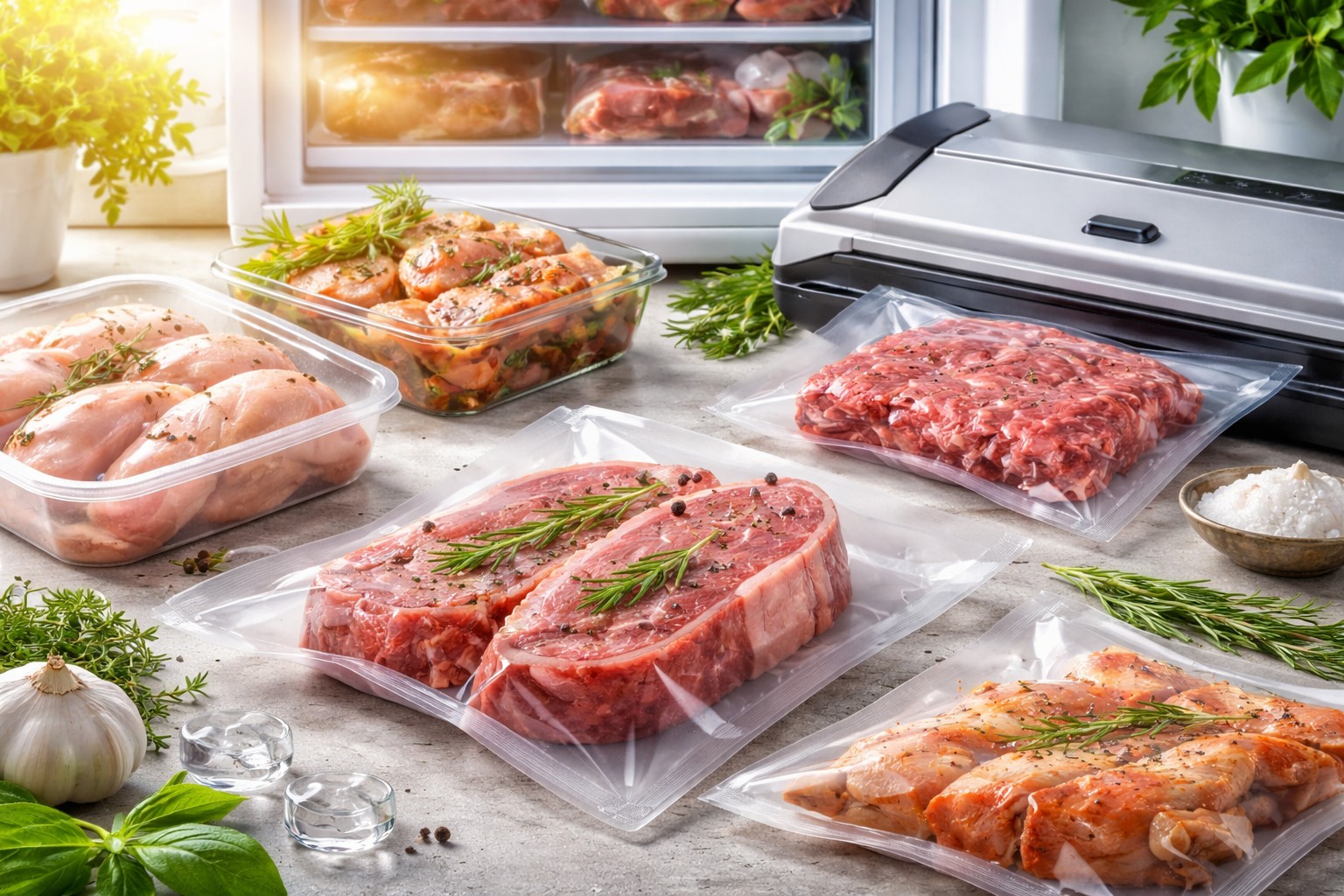
The secret of a perfect meat dish does not start with the marinade, but with the right temperature regime and choice of packaging. Errors in storage lead not only to loss of flavor, but also to the growth of dangerous bacteria. To avoid product spoilage, it is important to take into account shelf life, type of cutting и product neighborhood in the refrigerator.
Basic rules of refrigeration
Fresh meat requires special attention immediately after purchase. The optimal temperature for storage in the refrigerator varies from 0 to +4 degrees. Under such conditions, beef remains fresh for up to three days, while pork and poultry retain their properties slightly less.
-
Use glass or ceramic containers with tight lids instead of the usual cellophane bags.
-
Avoid storing meat in a store-bought plastic tray unless it is vacuum-sealed.
-
Place product on bottom shelfwhere the temperature is usually the most stable.
-
Do not wash meat before putting it in the cold, as the extra moisture accelerates oxidation and rotting processes.
The intricacies of long-term freezing
If you don’t plan to cook the product in the next 48 hours, it’s best to freeze it. Deep freeze at temperatures of -18 degrees Celsius and below can preserve the nutritional value of meat for up to a year. However, it is important to follow the preparation technology.
-
Divide the meat into portioned pieces so as not to defrost the entire volume at once.
-
Wrap each piece tightly parchment paper or special foil for freezing to prevent “cold burn”.
-
Remove excess air from the bag by creating conditions close to the vacuum packaging.
-
Be sure to sign the freeze date on each roll.
Good Neighborliness and Safety
Meat is a highly biologically active product that easily absorbs foreign odors and can itself become a source of cross-contamination.
-
Never store raw meat near prepared foods, sausages or cheeses.
-
Stuffing spoils much faster than a whole piece of meat, so it is recommended to use it within 12 hours of purchase.
-
When defrosting, transfer meat from the freezer to the refrigerator for 12-24 hours, as slow thawing preserves the fiber structure and juiciness.
A competent approach to organizing space in the refrigerator guarantees food safety and high quality of cooked food. Timely temperature control and the choice of quality packaging are the key to keeping meat products fresh for a long time.
About the Author