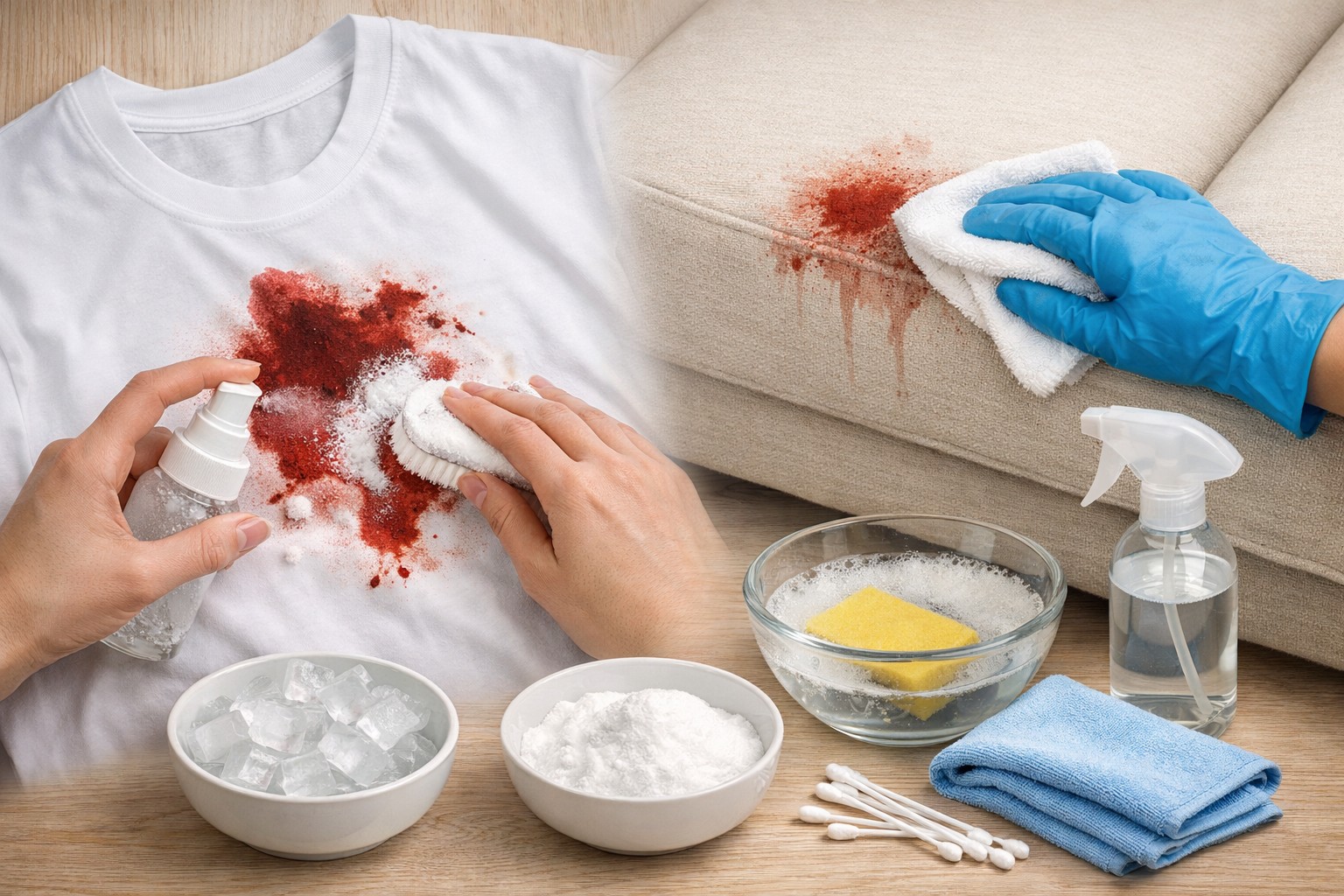
Blood stains are considered one of the most difficult contaminants, but the secret of their successful removal lies not in expensive chemistry, but in the right temperature and speed of reaction. The main rule to remember forever: cold water – is your best ally, while hot water permanently “brews” the protein in the fibers of the tissue.
Fresh marks: first aid
If the trouble has just happened, you need to act immediately. As long as the blood has not dried, it can be removed from almost any surface using simple tools.
-
Running water. Place the fabric under a stream of ice water on the wrong side of the fabric. This will wash out the pigment particles, preventing them from penetrating deeper into the thread structure.
-
Laundry soap. Regular dark soap contains lye, which effectively breaks down organic compounds. Soap the stain thoroughly and leave it for 15-20 minutes.
-
Saline solution. If you are in a guesthouse or cafe, sprinkle salt on the wet stain. It will work as a absorbentThe absorbent will absorb a significant portion of the liquid.
How to remove stubborn stains
When the dirt has already had time to dry, the usual rinse will not be enough. This is where drugstore and kitchen remedies come to the rescue, which work as effective remedies solvents.
-
Hydrogen peroxide. Ideal for light-colored and dense fabrics. Apply the solution to the soiling, and as soon as the characteristic hissing starts, blot the spot with a clean cloth. Be careful with colored items, as the peroxide can discolor the dye.
-
Aspirin. A crushed tablet mixed with a drop of water to a mushy consistency is great for stains on woolen garments.
-
Starch. For delicate materials such as silk, it is better to use potato or cornstarch. Apply it to the wet stain, wait for it to dry completely and simply brush it off.
-
Rubbing alcohol. Mix a teaspoon of alcohol with a glass of water to clean the upholstery of your sofa or mattress. This method helps to restore the original look even to neglected areas.
How to work with different surfaces
When cleaning upholstered furniture or carpets, it is important not to rub the product deep, but to move from the edges to the center. This will prevent the appearance of unkempt streaks, which often remain after drying. For mattresses it is better to use the method dry cleaning with a minimum amount of water to avoid mold growth inside the filler.
Quality cleaning requires patience and care, especially when working with fine fabrics. The right method allows you to completely restore the spoiled thing without going to a dry cleaner. The effectiveness of home cleaning directly depends on how quickly the treatment of the contaminated area was started.
About the Author