Preserving the quality of fish is an art that requires compliance with the temperature regime and the right choice of packaging. Violation of storage rules turns a useful product into a source of danger, so it is important to know how to extend the life of your catch or purchase without losing its flavor.
Storage rules for fresh fish
Fresh fish is an extremely delicate product. Its life span in a normal refrigerator at temperatures between 0 and +2°C is limited. two days. If you plan to cook it later, it is better to send the product to the freezer immediately.
-
Before putting the fish in the freezer, it should be gut and rinse thoroughly. The entrails are the main source of bacterial growth.
-
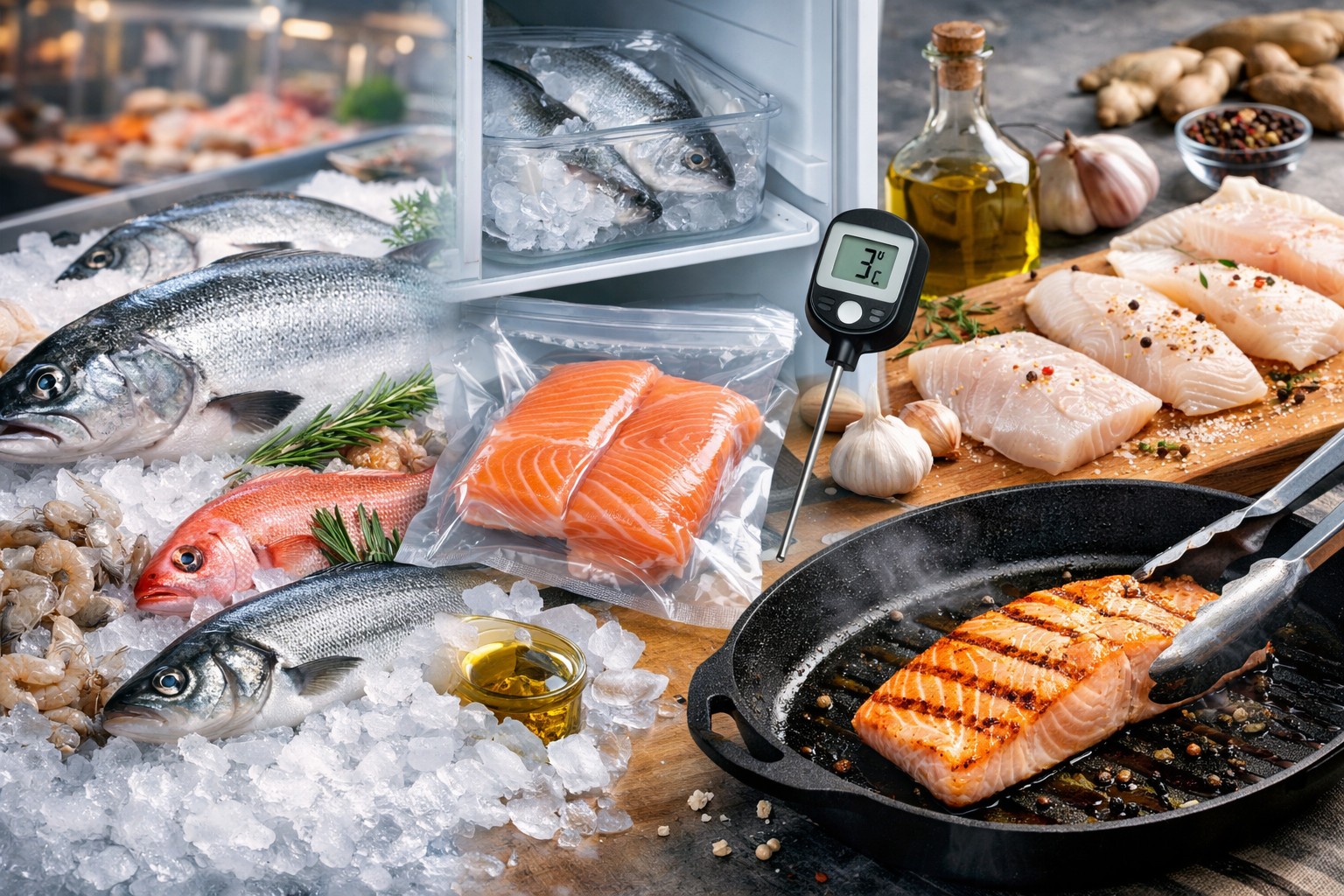
Use the “ice cushion” method. Place the fish in a container of crushed ice and cover with a damp towel. This will bring the storage conditions as close to professional display cases as possible.
-
Avoid using plastic bags for refrigerated products. The best option is parchment paper or a glass container that allows the product to “breathe”.
Features of freezing and defrosting
Freezing helps to preserve fish for 3 to 10 months, but it is important to do it correctly so that the fiber structure is not destroyed.
-
Use sealed vacuum bagsto prevent “frost burn” and weathering of moisture.
-
The most important step is proper defrosting. Never defrost fish in warm water or at room temperature. Only slow thawing on the bottom shelf of the refrigerator will keep the meat dense and juicy.
-
Re-freezing is strictly forbidden, as it completely destroys the protein texture and promotes the growth of microflora.
Storage of ready-to-eat and salted products
Prepared fish dishes, whether fried fillets or baked steak, retain their properties for a period of 24-48 hours.
-
Lightly salted fish in homemade marinade is stored for no more than 3 days. If the product is in factory vacuum packaging, focus strictly on the manufacturer’s terms.
-
Smoked fish should be kept separately from dairy products and eggs, as they instantly absorb a specific odor.
-
The optimal packaging for the finished product is foil or a tightly sealed container to prevent weathering.
A proper approach to temperature control ensures that all the nutrients and natural flavors of seafood are preserved.
About the Author